 Reviews


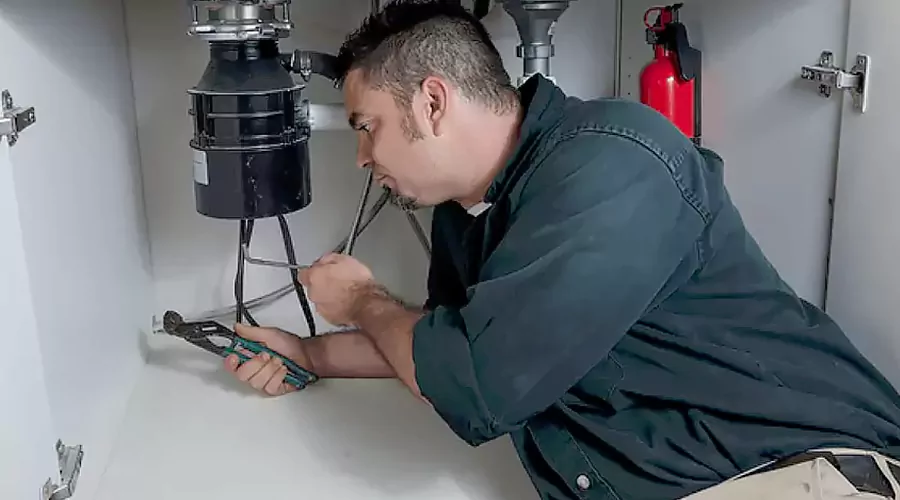
You can fix garbage disposal problems yourself in about 80% of cases, often in five minutes with no tools and for free. A professional visit for the same jam costs $75 to $150.
The machine only fails four ways: Silent, humming, backed up or leaking. Each symptom has its own fix, and the symptom tells you exactly where to start.
Even scrambled searches like disposal garbage not working land on the same checklist below. A garburator not working follows it too, since that's the same machine under its Canadian name.
When the Disposal Is Not Working at All?
A garbage disposal not working with total silence has a power problem rather than a mechanical one. Total disposal not working stillness actually rules out a jam, because a jammed motor hums. Work through the power chain from the unit upward.
- Press the reset: The small red or black button on the bottom of the unit trips when the motor overheats, which is common after a hard jam. Press it firmly until it clicks. A garbage disposal stopped working mid-grind almost always tripped this thermal overload.
- Check the breaker: Find the breaker labeled disposal or kitchen, flip it fully off and then back on if it sits tripped or halfway. A waste disposal not working after the reset clicks usually ends here.
- Check the cord: A plug-in sink disposal not working may just have a cord knocked loose at the outlet inside the cabinet. Check the GFCI outlet reset as well.
- Test the switch: A kitchen garbage disposal not working after both resets points to the wall switch or its wiring.
Age writes the last chapter. A garbage disposal quit working for good when the motor burns out, and no reset revives a dead motor.
Garbage Disposal Humming but Not Grinding
A garbage disposal humming without spinning means the motor is receiving power but the grinding plate can't turn, and something is jammed between the impellers and the shredder ring. A jammed garbage disposal clears in under fifteen minutes. Never let it hum for long, because a stuck motor overheats within minutes.
Safety comes before tools. Unplug the unit or kill its breaker first, and remove visible debris with tongs, never your hands.
- Use the hex port: You can fix food disposal jams from below with a quarter-inch hex key. Insert it into the hex hole under the unit and work it back and forth to free the impellers.
- Work from above if needed: The wooden-spoon method will also fix sink disposal jams: brace the handle against a blade and lever the plate in both directions.
- Extract the object: Pull out whatever caused it, since a food disposal stopped working on bones, fruit pits or a dropped utensil will jam again on the same item.
- Reset and test: Press the thermal reset, run cold water and flip the switch. Repeat the hex rotation if the hum returns.
Remember what the sound means. A food disposal not working but humming is stuck rather than dead, and stuck is the cheap problem.
Water Backing Up While the Motor Runs
A garbage disposal not draining despite a freely spinning motor has a clog downstream of the grinding chamber. A blocked discharge pipe makes a healthy unit appear broken. The fix lives in the P-trap under the sink.
Place a bucket under the P-trap, disconnect the slip-joint fittings by hand and clear the trap. A replacement trap costs $8 to $15 and installs in five minutes if you find cracks. A trash disposal not working right despite good grinding is running this exact scenario in most kitchens.
The dishwasher connection causes the sneaky version. A dish disposal not working with a brand-new dishwasher often still has the knockout plug sealed inside the side inlet port, so the dishwasher can't drain through it. Likewise a dish disposal stopped working during the wash cycle points at that same shared side connection.
Garbage Disposal Leaking and Where It Starts
Garbage disposal leaking traces to exactly three origins: the sink flange on top, the dishwasher connection on the side or the drain pipe at the bottom. Location decides everything. Two of the three are cheap fixes while the third means shopping.
Dry the unit completely, then run water and watch with a flashlight. Water runs downhill, so a loose top or side connection can drip to the base and fool you. Most attempts to fix waste disposal leaks end at resealing the flange or snugging the side and drain connections, which cost $100 to $200 professionally.
The bottom is different. A garbage disposal leaking from bottom housing seams means the internal seals have failed, and those seals aren't replaceable on most residential models. Water inside the housing also ends the electrical story, since a waste disposal unit not working after water reaches the motor windings is a total loss that should never be dried out and reused.
Repair or Replace in 2026
Age and symptom decide this call in seconds. Disposals last about 10 years with proper care. A unit over 8 years old, leaking from the bottom or facing a repair above half the replacement price should be replaced. In these cases, garbage disposal replacement is often the more practical option.
| Job | 2026 cost |
|---|---|
| Jam cleared professionally | $75 to $150 |
| Unclogging service | $70 to $200 |
| Leak repair (top or side) | $80 to $180 |
| Full replacement installed | $200 to $550, most paying $300 to $450 |
| DIY replacement | $75 to $200 for the unit alone |
Buying smart trims the total. Purchase the unit yourself during a home-store sale, and flat-rate installation averages $189.
When to Call a Professional
Call a pro when electricity or repetition enters the picture. Three specific situations justify the service fee, and each one involves risk beyond a hex key.
- The reset trips persistently after the jam is cleared, which signals a deeper electrical or motor issue.
- The unit is hardwired rather than plugged in, putting the swap in electrician territory.
- A hum arrives with a faint burning smell, which means shut it off and stop experimenting.
Labor runs $50 to $125 per hour, with plumbers at $45 to $150 and handymen at $50 to $80. A straight swap fits the handyman column while new wiring or a code-required dedicated GFCI circuit needs the license.
Prevention Keeps It Grinding
Disposals die from what they're fed rather than how often they run. Four feeding rules prevent nearly every jam and clog above. All four cost nothing.
- Run cold water always: Start it before grinding and let it run 15 seconds after, so waste flushes fully down the line.
- Ban the jam-makers: Bones, fruit pits and utensils cause the most jams, and fibrous peels wrap the plate.
- Keep grease out: It coats the chamber and hardens in the discharge pipe.
- Grind ice monthly: A tray of cubes scours the chamber and knocks buildup off the impellers for free.
Conclusion
Silence means power, humming means jam, backup means clog and a wet base means seals. Match your symptom to its section and most repairs finish before dinner. Bottom leaks and repeat electrical trips are the honest end of a unit's life. This week, tape a hex key inside the sink cabinet so the next jam costs you five minutes instead of $150. That's how you fix garbage disposal trouble for a decade.